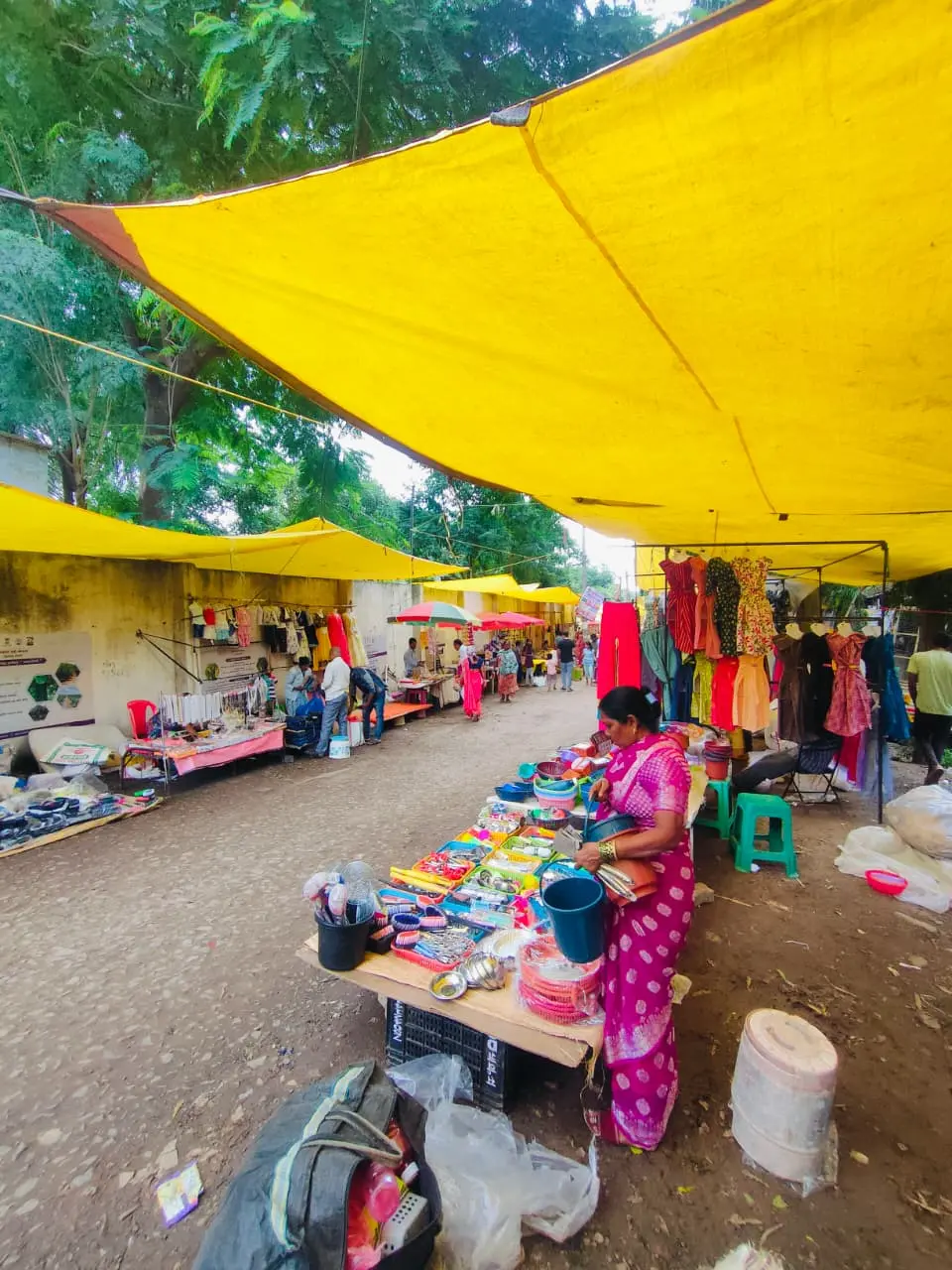


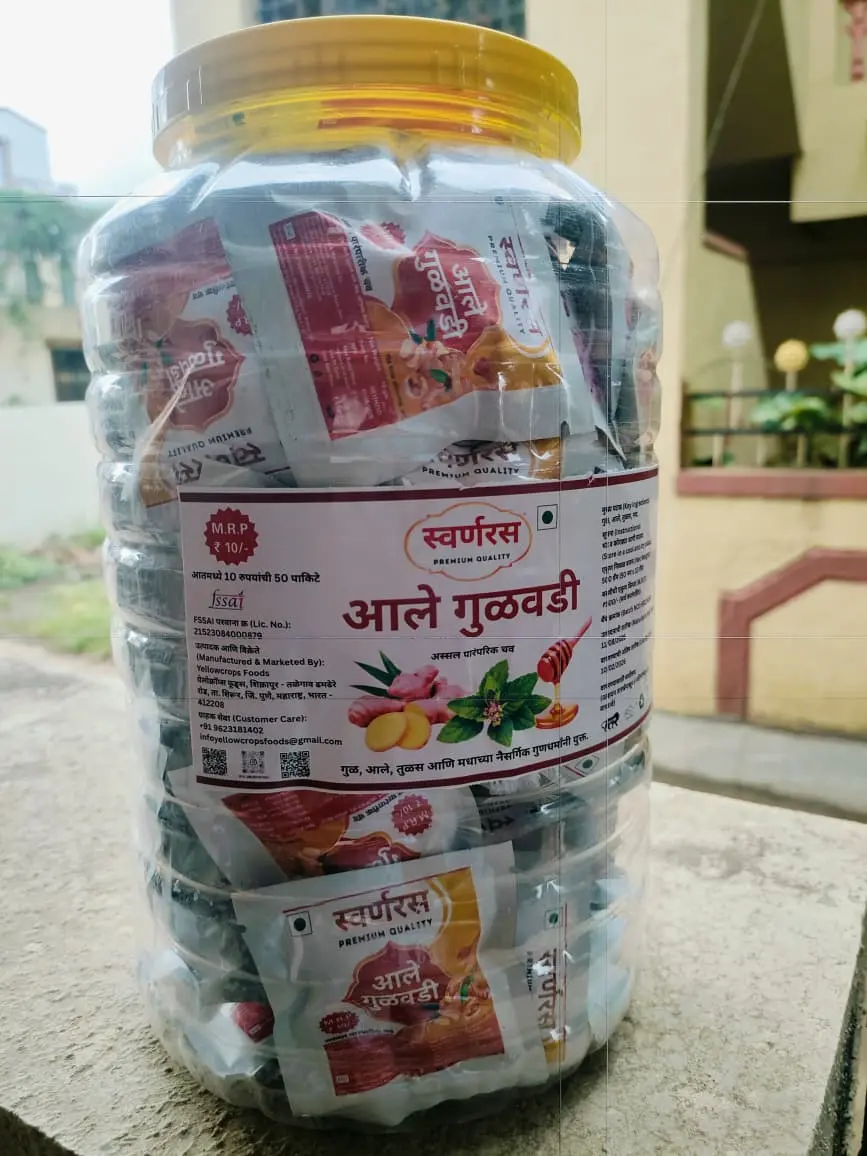
There's a special kind of magic in a weekly village market. It’s a symphony of sounds, smells, and human connection that you simply can't replicate online or in a supermarket. This past week, I wasn't just a visitor soaking it all in; I was a part of the symphony. With a small stall, a handful of products, and a heart full of hope, I stepped into the market to share something deeply personal: Alegulvadi, our very first in-house brand from Yellowcrops Foods.
This wasn't just about making a few sales. It was about the search for the elusive "product-market fit"—a term that sounds simple in a business plan but is a world of complexity in reality. After dozens of trials in our kitchen, tweaking recipes until the balance of sweet and spice was just right, we had two final versions. But I knew the ultimate test wouldn't be in our controlled environment. It had to be with the people, in the real world.
The experience was more than I could have ever hoped for. Our samples sold out by evening! But the true value wasn't in the empty boxes; it was in the full spectrum of experiences and the raw, unfiltered feedback. For any entrepreneur, here are the five beautiful and challenging lessons I took away from my day at the market.
My Five Truths of the Marketplace
1. The Market Has Its Own Rhythm I learned quickly that a market has a distinct pulse. The morning and noon hours were a time of leisure and discovery. People strolled, they explored, and they were open to trying something new. This is when most of our packets were sold. But as the evening approached, the atmosphere shifted. The crowd swelled, becoming more intense and purpose-focused. Shoppers moved with a mission: grab the essentials and head home. Our little "want-based" treat took a backseat to the "need-based" vegetables and groceries. The lesson was clear: timing isn't just about the clock; it's about understanding the customer's mindset at different times of the day.
2. The Power of a Single Bite: The "Jio Strategy" of Taste In India, we love a 'test drive,' whether it's for a car or a 10-rupee candy. I saw this firsthand. Taste is the ultimate decision-maker. I offered a small bite to passersby, and the reaction was immediate. A moment of hesitation, a curious nibble, and then a smile. That smile was the bridge to a sale. If they liked it, they bought it. It’s a simple, powerful transaction built on trust and experience. No amount of shouting about benefits can replace the simple, honest proof of a single, delicious bite.
3. The Entrepreneur's Smile: Learning to Weather Rejection This was perhaps the hardest lesson. For every person who bought a packet, several others politely declined. When your heart and soul are in a product, a "no" can feel personal. I could feel my smile falter, my energy dip. But then, a few moments later, a new customer would arrive, love the taste, and buy two packets. The joy of that sale would erase the sting of the last rejection. I'm still learning how to keep a happy, open face no matter what, but I now understand that resilience isn't about never feeling sad; it's about not letting that sadness linger.
4. Packaged Food Is a "Want," Not a "Need" In a market filled with essential goods, a new packaged food item is an interruption. People don't come looking for you; you have to make them find you. I realized I couldn't just stand behind my stall. I had to be the voice of my product, its biggest cheerleader. I had to "shout" – not with volume, but with passion and energy – inviting people to try something different, something healthier. You have to create the "want" because you are competing with a thousand other "needs."
5. The Favorable Environment for Growth In school, we learned that every living thing, from a microorganism to a plant, needs a favorable environment to grow. I discovered that the same is true for a product. You can have the best recipe, the most beautiful packaging, and the most compelling story, but success also depends on factors you can't control: the weather, the mood of the crowd, the location of your stall. You can't force a sale. All you can do is create the best product possible and show up, ready to make the most of the favorable moments when they arrive.
The "Why" Behind Alegulvadi: A Story of Local Goodness
My journey with Alegulvadi began with a simple observation. The traditional "alepaak" (ginger candy) available in our local markets was almost always made with refined white sugar. I saw an opportunity to create something better, something more aligned with our roots.
Our region is a heartland of agriculture. The fields are abundant with sugarcane, and local jaggery manufacturing units are a common sight. Our farmers also harvest some of the most aromatic and pungent ginger you can find, and Tulsi plants grow plentifully in local farms and homes. The pieces were all there. I just had to put them together.
By sourcing our core ingredients directly from these local farmers, we not only ensure the highest quality but also support the community that sustains us. This isn't just a business strategy; it's a belief in the power of our local ecosystem.
Our purpose is to create mouthwatering, nutritious foods that make you healthier, happier, and stronger—across borders. Each Alegulvadi bite is a carefully crafted blend of ancient wisdom and local goodness:
- Jaggery: We use this golden, unrefined sweetener instead of empty-calorie white sugar. Jaggery provides a sustained release of energy and retains essential minerals like iron and magnesium that are stripped away during refining. It's nature's way of sweetening life.
- Ginger: Known for centuries as a digestive aid, this pungent powerhouse provides a warming comfort that soothes the senses. It's a staple in traditional remedies for a reason.
- Tulsi (Holy Basil): Revered in Ayurveda as the "Queen of Herbs," Tulsi is a natural adaptogen. This means it helps the body manage stress and supports a strong, resilient immune system. A clinical trial on healthy volunteers confirmed that Tulsi extract significantly increases key immune cells.
- Honey: Nature’s own remedy, honey is known for its ability to soothe throats and for its natural antibacterial properties, making it a perfect partner in our wellness blend.
-
Turmeric, known as nature’s golden healer, adds anti-inflammatory benefits, while a touch of lemon juice or citric acid brings a bright, refreshing zing to balance the flavors perfectly.
The other day, I was walking past a local medical store and saw someone buying a packet of Alegulvadi. It gave me goosebumps. To see something that started as an idea in my head, perfected through countless trials, and tested in the beautiful chaos of the market, finally become a part of someone's daily wellness routine—that is the ultimate validation.
That single moment crystallized everything. This is why we do what we do. The journey is just beginning, but the lessons from the market have been my greatest teachers. It's a beautiful, challenging, and incredibly rewarding path, and I am so grateful to be on it.
By: Pritesh Dahiphale Founder, Yellowcrops Foods September 5, 2025
Sources: Jaggery vs Sugar. (2024).
Two Brothers Organic Farms. Jaggery (Gur): Is It Good for You? (2024). Patanjali Ayurved. Ginger. (2023). Memorial Sloan Kettering Cancer Center. Tulsi (Holy Basil): A Herb for All Reasons. (2014). Journal of Ayurveda and Integrative Medicine. A review on the pharmacological and therapeutic properties of Ocimum sanctum (Tulsi). (2019). Journal of Pharmacognosy and Phytochemistry. Double-blinded randomized controlled trial for immunomodulatory effects of Tulsi (Ocimum sanctum Linn.) leaf extract on healthy volunteers. (2011). Journal of Ethnopharmacology. Ginger Juice Benefits: Boost Winter Health with Tulsi and Jaggery. (2024). Times of India. Honey: A Comprehensive Review of Its Properties, Healing Potential, and Health Benefits. (2017).
Oxidative Medicine and Cellular Longevity. Tulsi Ginger Turmeric Tea - The Taste of India. (2023).
Chitchat Chai. Double-blinded randomized controlled trial for immunomodulatory effects of Tulsi (
Ocimum sanctum Linn.) leaf extract on healthy volunteers. (2011). Journal of Ethnopharmacology. Ginger. (2011).
Herbal Medicine: Biomolecular and Clinical Aspects. 2nd edition. Tulsi - Ancient herb, modern medicine: Exploring the health benefits and research. (2024).
News-Medical.net. 7 reasons to consume jaggery every day for your health. (2025).
Times of India. Honey. (2023).
Mayo Clinic. Health Benefits of Jaggery. (2024).
Paras Hospitals. 5 Ways to Market Healthy Snacks. (2023).
5WPR. What happens when you chew 3-4 tulsi (basil) leaves on an empty stomach? Know its health benefits. (2025).
Times of India. 5 ways ginger is good for your health, according to science. (2024).
ScienceAlert. Honey. (2023).
Mayo Clinic.